Break the Ice Science Experiment

Try this fun science experiment with your kids – you can incorporate “Elsa” from Frozen into it!
This post may contain affiliate links. Please read our Disclosure Policy.
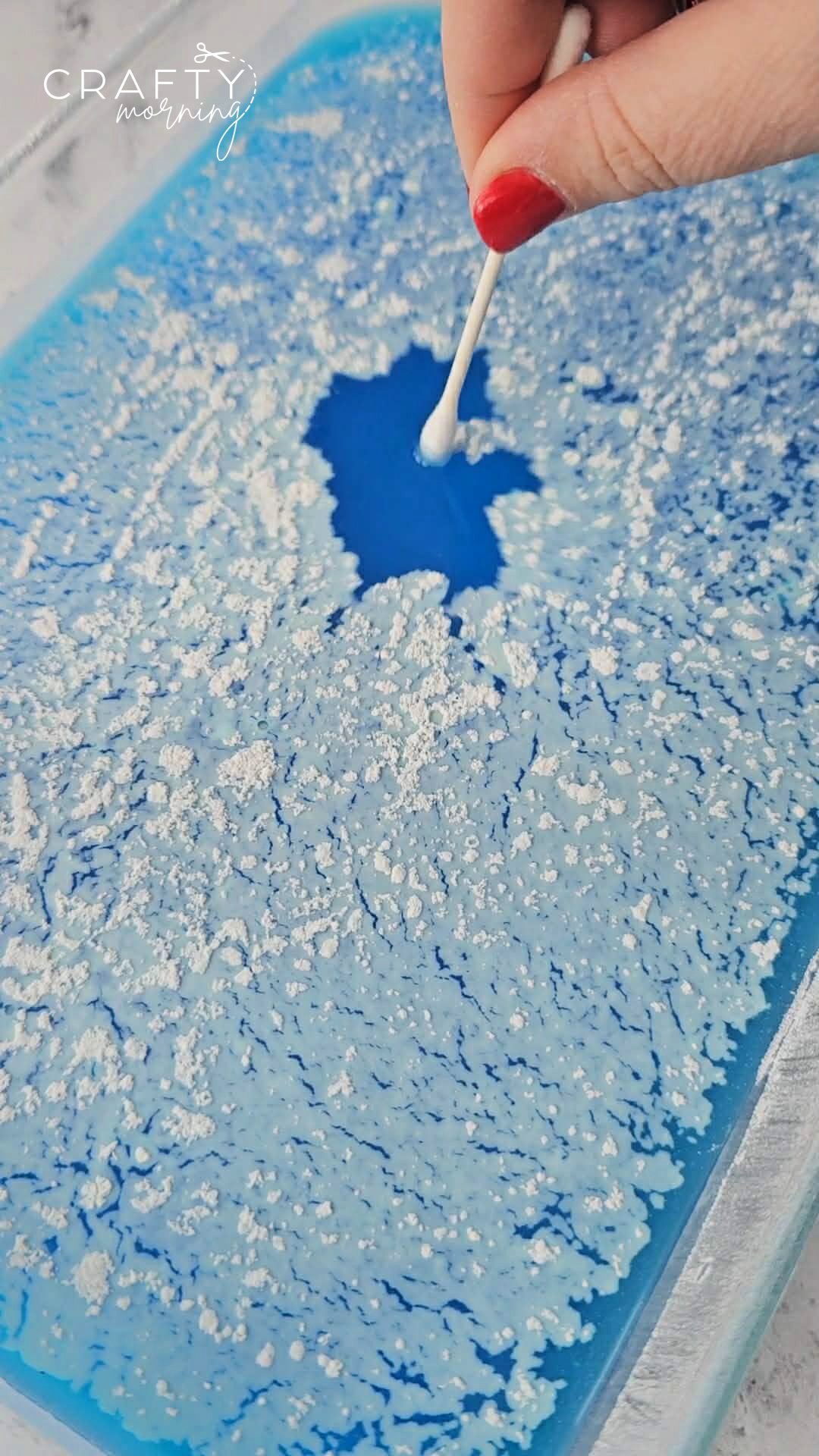
1. Baby powder floats because it is hydrophobic
Most baby powders (talc or cornstarch) are hydrophobic, meaning they don’t mix with water.
So when you sprinkle it on water, it stays on the surface, floating like tiny dry flakes.
2. Water has strong surface tension
Water molecules strongly attract each other and form a kind of “skin” on the surface.
The baby powder rests on this surface tension layer.
3. Dawn dish soap breaks surface tension
Dish soap is a surfactant. As soon as the soap touches the water:
- It reduces the surface tension around the Q-tip.
- Water molecules pull away from the soap-covered area.
- The floating powder is quickly pushed outward by the moving water.
This sudden movement creates the effect you described:
It looks like sheets of ice cracking and sliding apart.
Why it looks like ice moving
Because baby powder floats in thin layers, when the water beneath it moves suddenly, the powder layer breaks into plates and shoots outward. It resembles:
- ice floes separating,
- shattered frozen lakes,
- or broken glass sliding.
This is due to a combination of:
surface tension collapse
rapid water flow away from the soap point
hydrophobic powder riding the movement
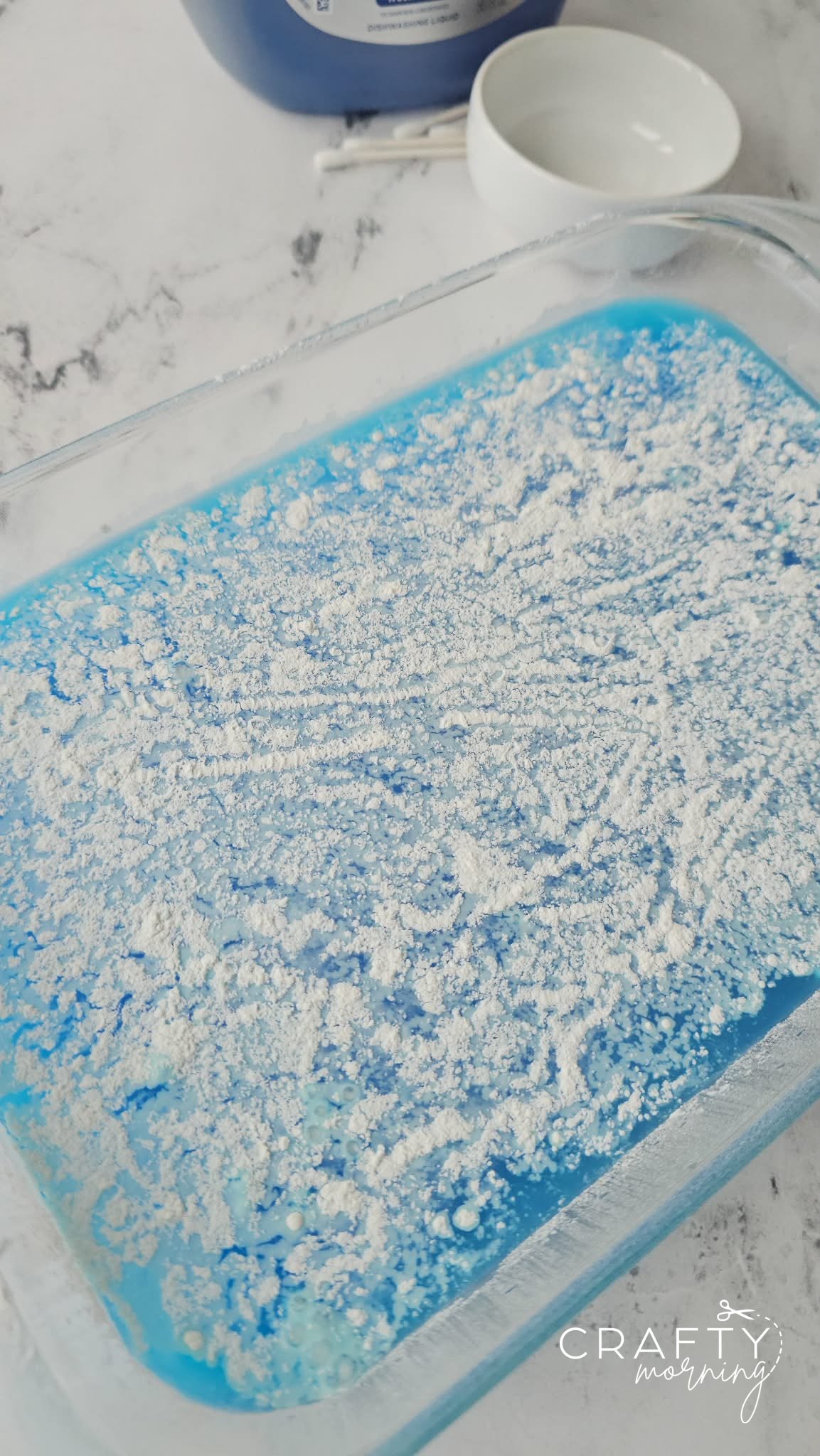
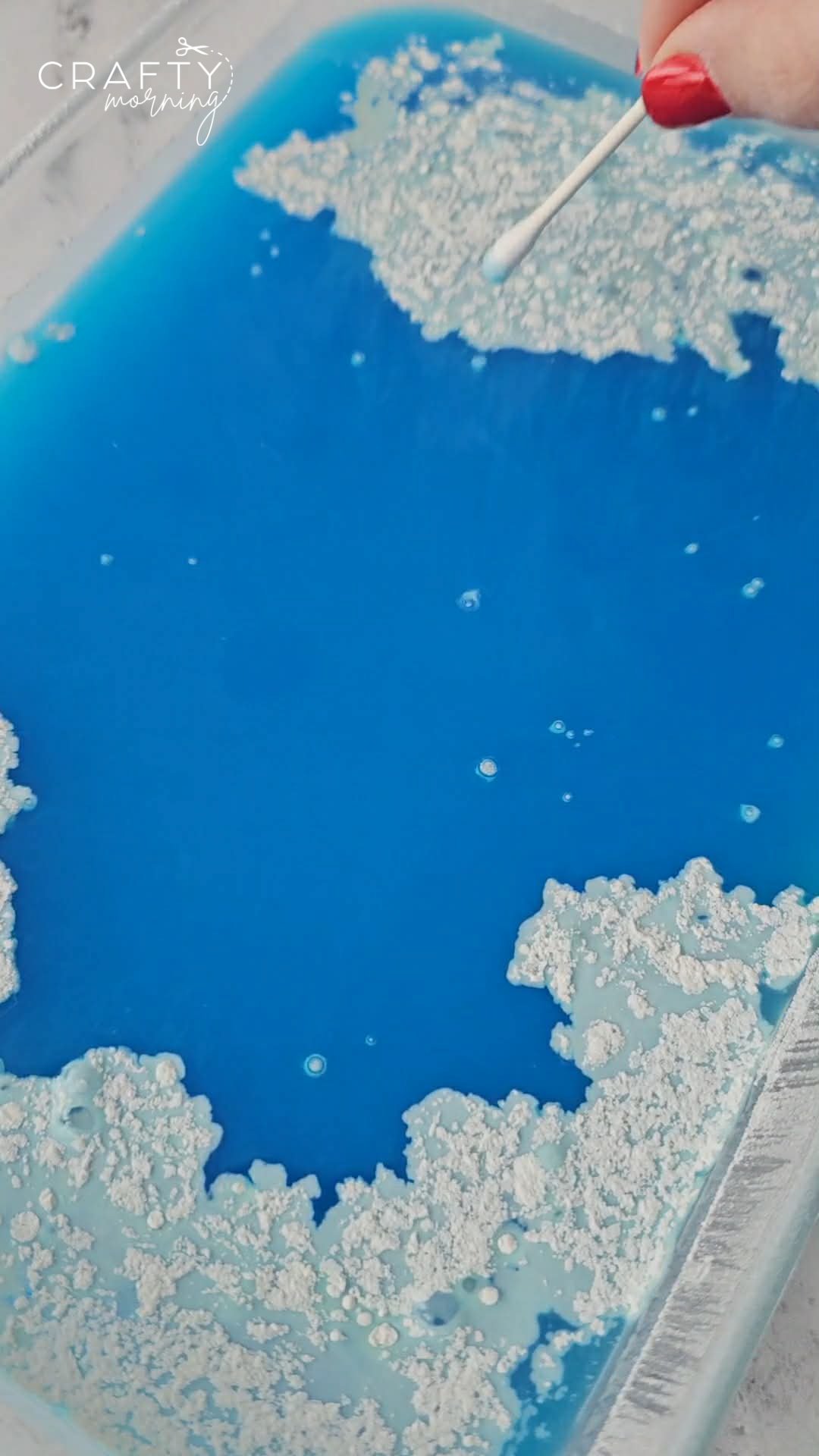
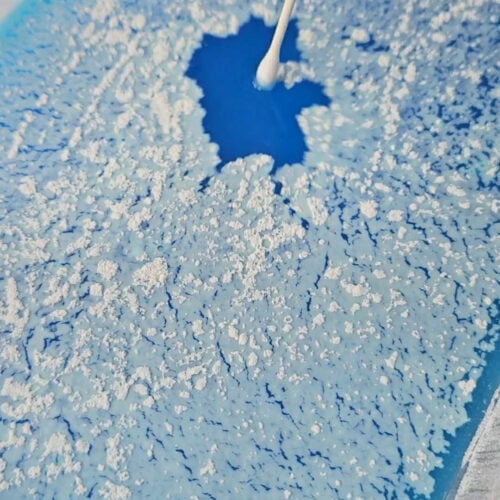
Break the Ice Experiment
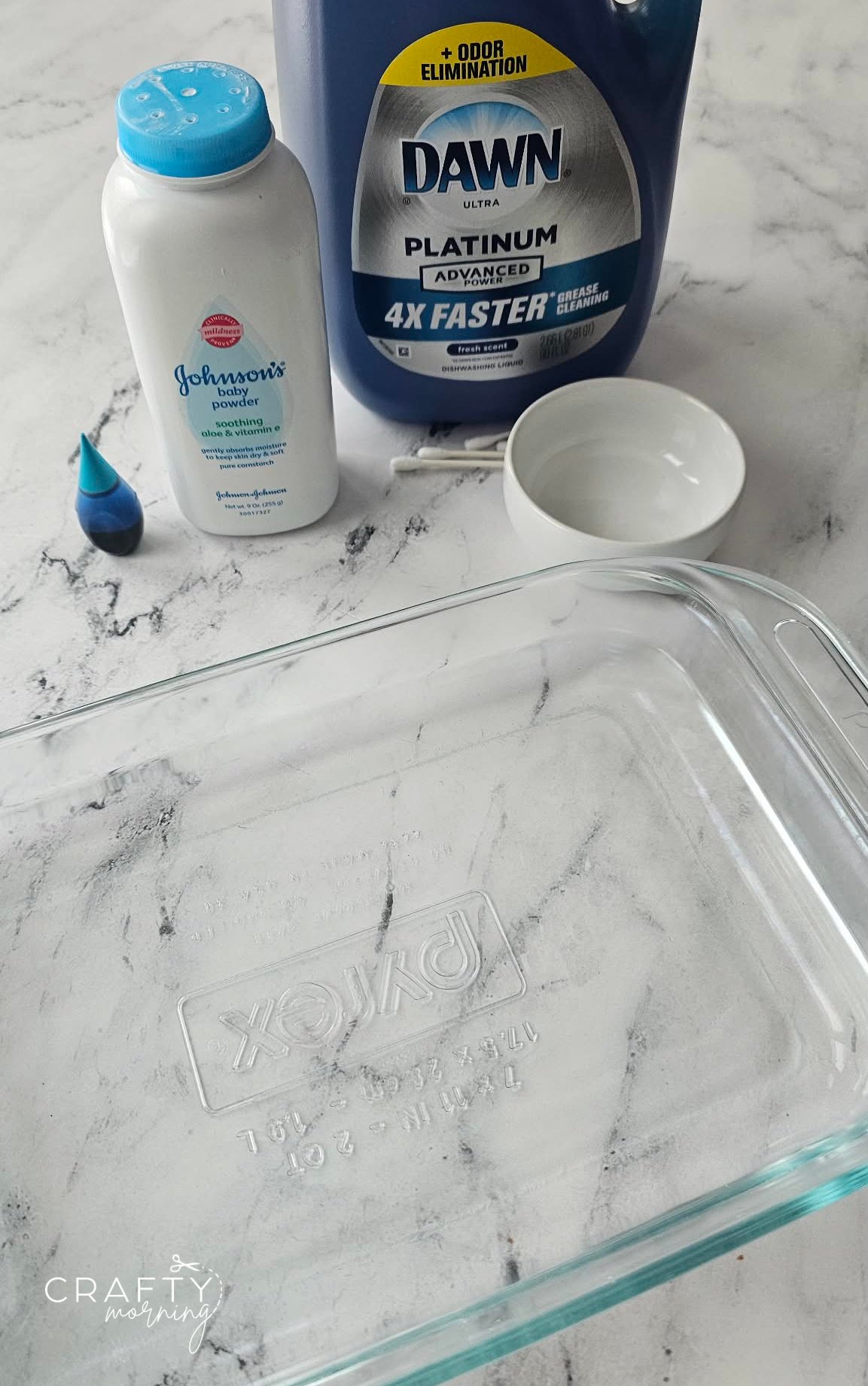
Materials
- Baby Powder
- Water
- Blue food coloring
- Dawn dish soap
- Q-tip
- Dish
Instructions
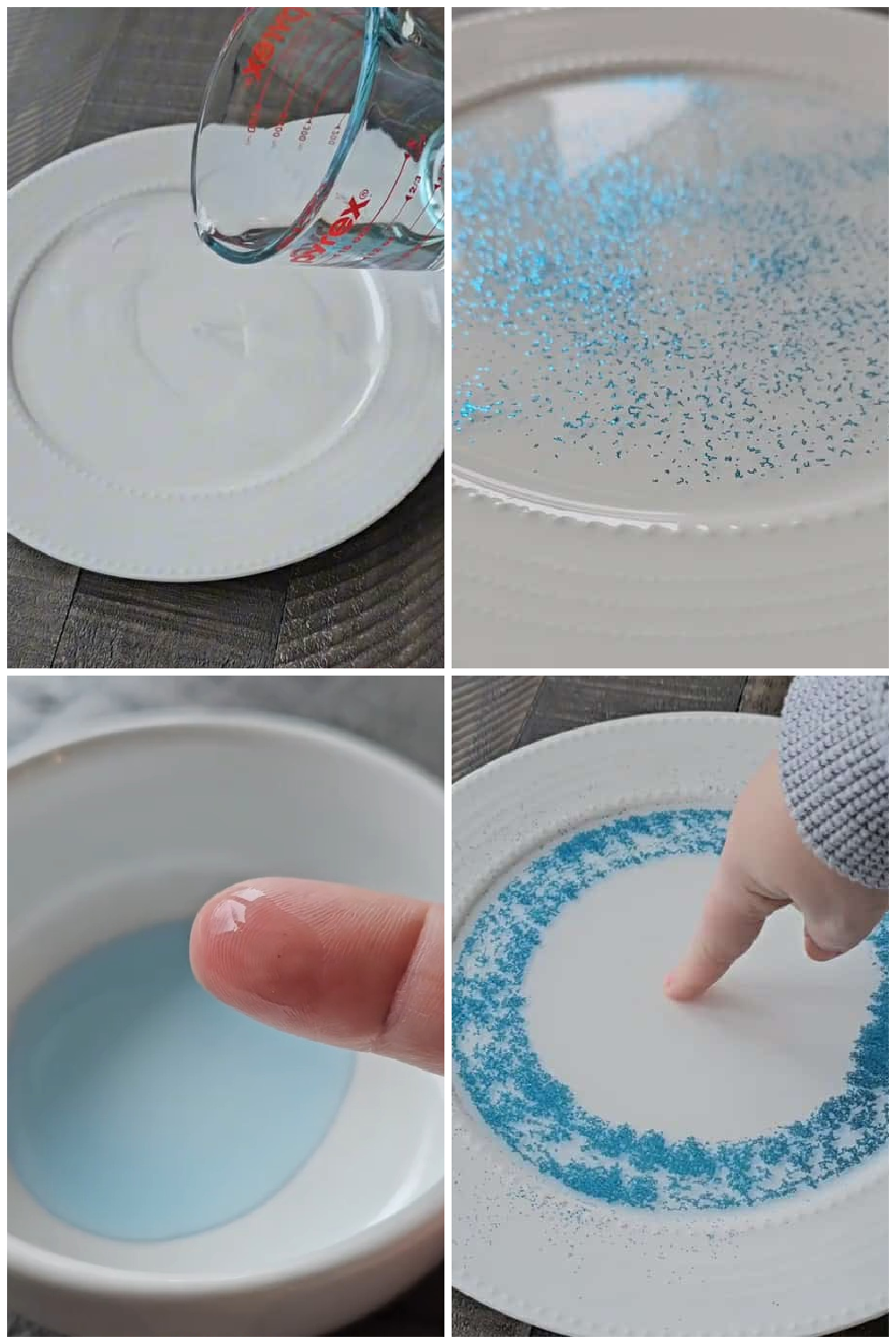
- Fill dish with water leaving some room on top, then add a couple drops of blue food coloring. Stir.
- Put dish soap in a small bowl.
- Shake a thick layer of baby powder on top of the water.
- Dip the q-tip into the soap then press into the baby powder. It will "crack" one or two times.
Notes
You can add another layer of baby powder after the first one but it might not work as well. Need to refill fresh water.